__largepreview__.webp)
Four Signs Your Child is Ready for Preschool
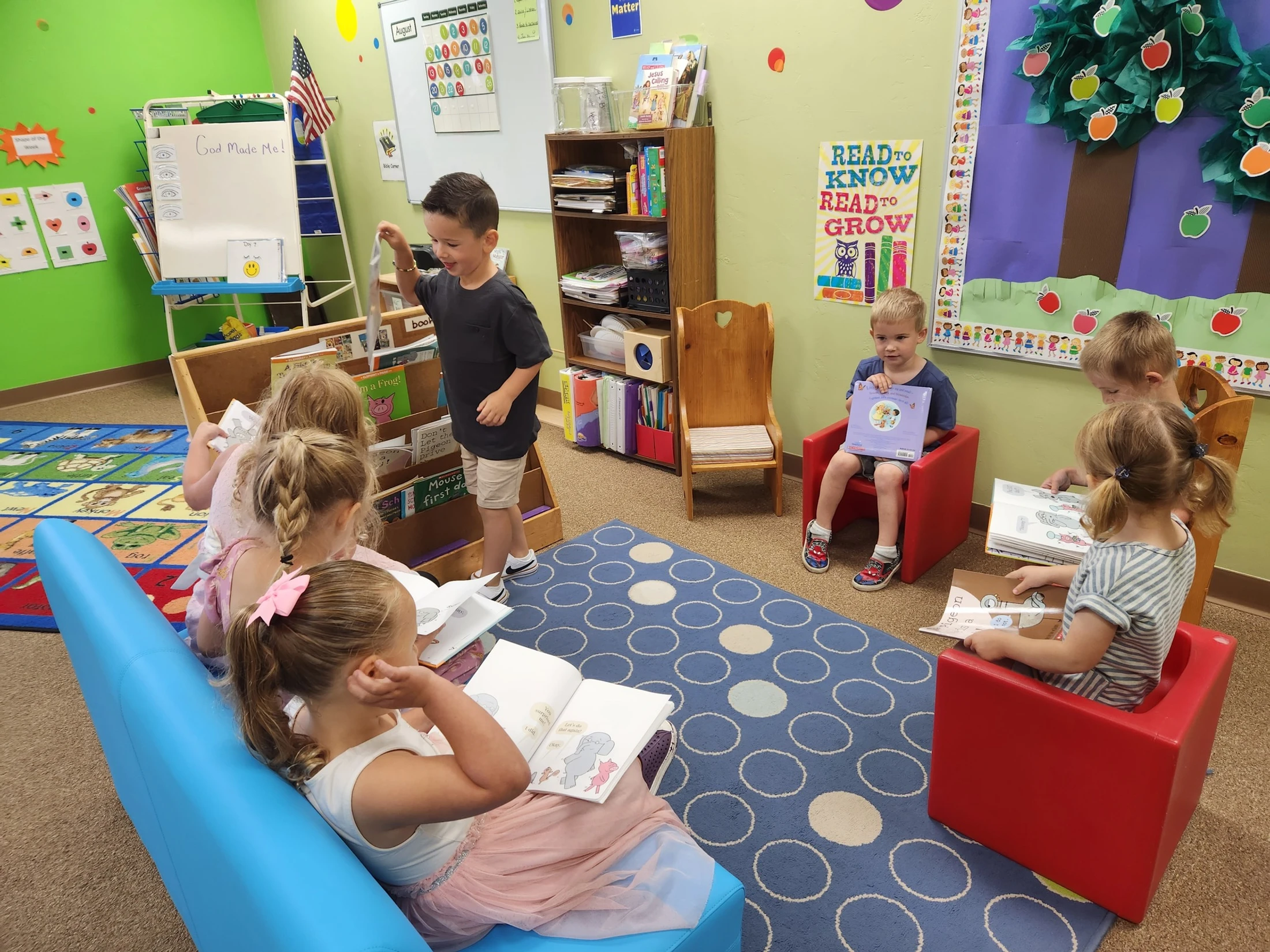
You've been thinking about preschool. Maybe you've toured a campus, picked up a brochure, or asked friends about their PreK experiences.
But somewhere in the back of your mind, a question keeps coming up: “Is my child actually ready for this?”
It's one of the most common concerns we hear from parents of three- and four-year-olds. And it's a great question to ask! Preschool readiness is a legitimate concern, and understanding what it looks like can help you make a confident, informed decision for your child and your family.
Of course, preschool readiness is not a pass/fail test. Not every child will check every box that proves they’re “ready” – but this guide will help you determine if they’re meeting most of the necessary milestones. Plus, if your child truly isn’t ready, you’ll get tips on what to do if they're not quite there yet!
Our St. Mark school staff put together a helpful Preschool Readiness Checklist for families. It’s a 22-question home assessment tool that evaluates four key areas of development – social, emotional, cognitive, and physical. Let's walk through each one in greater detail!
Evaluating Your Child for Preschool Readiness
Preschool readiness is not just about academics. In fact, for three- and four-year-olds, academic knowledge is probably the least important factor. What matters most is whether your child is developing in these four interconnected areas that determine how well they will thrive in the classroom:
Social Development
Emotional Development
Cognitive Development
Physical Development
As you read through each section, think of it as a conversation starter, not a checklist your child mustcomplete before they are allowed to enroll.
Social Development: Is Your Child Beginning to Connect With Others?
One of the clearest signs that a child is ready for preschool is a growing curiosity about other children. You might notice your three- or four-year-old watching other kids at the playground or trying to join in on a game with their older siblings. That natural pull toward peer connection is a wonderful indicator of social readiness!
Here are some questions to consider when evaluating your child's social development:
Does your child have experience with group play?
Does your child seem interested in playing with other children?
Does your child respect adults in authority?
Does your child have appropriate control over their feelings?
Does your child have a good self-image?
None of these need to be perfect. A child who sometimes struggles to share or occasionally has big feelings is not socially unready for preschool. They are a normal three-year-old! What matters is whether these skills are developing and whether your child is generally moving in a positive direction.
It is also worth noting that preschool itself is one of the best environments for building social skills. Children learn to take turns, navigate conflict, and build friendships by doing these things alongside peers their own age – all in a safe, structured environment with a caring teacher nearby.
If social development is an area where your child needs to grow, preschool may be exactly what they need.
Practical tip: If your child has limited experience with group play, look for opportunities to practice before the first day of school. Playdates, church nursery or Sunday school, library story time, and neighborhood gatherings are all great ways to help your child become more comfortable around other children.
Emotional Development: Can Your Child Handle a Little Independence?
Separation makes many preschool parents nervous about the first day of school, especially if their child has been cared for at home or in a relative’s home their entire life. And it’s no secret: A little separation anxiety is completely normal for a three- or four-year-old. It’s also a sign of healthy attachment.
But there’s a difference between a child who cries at drop-off for a few minutes and then transitions happily into the classroom, and a child who is not yet developmentally ready to be away from their caregiver. Understanding where your child falls on this spectrum can help you prepare.
Here are some questions to consider when evaluating your child's emotional development:
Does your child do well when separated from their caregiver?
Does your child appear fearful in new situations?
Does your child have exposure to educational opportunities outside your home?
Does your child have exposure to social opportunities outside your home?
Is your child excited about going to school?
That last question is one of the most telling. A child who lights up when you talk about school, who asks when they get to go, or who pretends to play school at home is showing you something important. Their enthusiasm is a green light!
On the other hand, if your child has had very little experience away from home or becomes highly distressed in new environments, it may be worth investing some time in gentle, gradual exposure before the first day of preschool.
Practical tip: Practice short separations in the weeks leading up to school. Drop your child off at a grandparent's house, a trusted friend's home, or your church’s staffed nursery to give them the experience of being away from you and to help them learn that they will be OK. You can also visit the preschool campus before the first day so the environment feels familiar. Finally, read books together about starting school. These small steps can make a big difference in this transition to preschool.
Cognitive Development: Can Your Child Communicate and Follow Simple Directions?
When most parents think about cognitive readiness for preschool, they jump to questions like: “Does my child know their ABCs? Can they count to ten? Do they know their colors?”
It’s wonderful if your child already knows these building block skills, but they are not what preschool readiness is really about. What matters most is communication and attention.
Here are some questions to consider when evaluating your child's cognitive development:
Is your child able to express physical needs, such as needing the bathroom?
Is your child able to express emotional needs to an adult in simple language?
Is your child's speech understandable?
Is your child able to sit and listen to a three- to five-minute story read to them?
Is your child able to follow simple one-step directions?
Is your child enthusiastic when talking about school?
The ability to communicate needs, both physical and emotional, is one of the most practical readiness indicators for a preschool classroom. A child who can tell their teacher "I need to use the bathroom" or "I feel sad" is a child who can advocate for themselves in a group setting. That is a big deal!
Speech clarity also matters. By age three, most children's speech should be understandable to familiar adults, most of the time. By age four, speech should be understandable to unfamiliar adults most of the time as well. (Source)
If you have concerns about your child's speech development, it’s worth speaking with your pediatrician before preschool begins. Speech therapy may also be available within the preschool program you’re choosing, so be sure to ask that question when evaluating preschool programs!
Attention span is another key indicator. A child who can sit still for a short story (even three to five minutes!) is showing that they are learning the focused attention that classroom learning requires. If your child struggles to sit for a story right now, that is something you can practice at home every day, between now and the first day of school.
Practical tip: Read out loud to your child daily. Even five to ten minutes of shared reading builds attention, vocabulary, and a love of learning. You can also practice giving simple one-step and two-step directions at home, and celebrate when your child follows them. Finally, encourage your child to use words to express their feelings rather than acting them out. Helpful kid books about feelings can be found here!
Physical Development: Is Your Child's Body Ready?
Physical readiness for preschool is one of the most practical areas to work on. Before your child starts preschool, there are a handful of physical milestones that will make their daily experience much smoother.
Here are some questions to consider when evaluating your child's physical development:
Is your child 100 percent out of diapers?
Is your child able to care for their toileting needs independently?
Is your child able to zip and button?
Is your child able to walk up and down stairs without help?
Is your child able to make good use of free time?
Has your child been exposed to different art supplies?
Toileting independence is the big one. Most preschool programs require that children be fully potty trained before enrolling, and for good reason. A classroom teacher caring for a group of children cannot consistently manage diapering in addition to everything else. If your child is still working on this skill, make it a priority in the months before school begins. Accidents happen, and teachers understand that they are normal for preschoolers, but they shouldn’t happen on a daily basis.
Next, self-help skills like zipping a jacket, buttoning a shirt, and managing a backpack are also important. These small moments of independence happen multiple times a day in a preschool classroom – at arrival, at lunch, at outdoor play, and at dismissal. A child who can manage these tasks independently feels capable and confident. A child who cannot may feel frustrated or dependent on the teacher's help more than necessary.
What about fine motor development? Exposure to crayons, paintbrushes, scissors, play dough, and other art supplies helps build the hand strength and coordination your child will need for writing. If your child has not had much experience with art materials, now is a great time to stock up on some basic supplies and let them explore!
Finally, consider your child's ability to make good use of free time. Can your child find something to do and engage with it independently for a few minutes? This skill (sometimes called “self-directed play”) is an important indicator of developmental health and will serve your child well during free play time in the classroom.
Practical tip: Practice dressing and undressing at home. You can make it fun by celebrating every successful zipper and button. Spend some time setting up an art station with basic supplies, such as crayons, paper, washable paint, and safety scissors, and let your child explore freely. And finally, build your child’s potty training confidence by making that a priority before the first day of school.
What If My Child Is Not Ready in Every Area?
A child who scores perfectly on a Preschool Readiness Checklist is an anomaly!
Every child who walks through our preschool doors arrives with strengths and areas they need to work on. Some children are socially confident but struggle with holding attention. Some are emotionally ready but still working on speech clarity. Some are physically ready but have had limited experience with group play. This is completely normal and exactly what our teachers are trained to navigate.
Every child progresses at their own pace. Readiness is not a bar your child must clear to deserve a spot in our classroom. It’s simply a starting point for a conversation about how we can best support your unique child.
Preschool itself is one of the most powerful tools for building school readiness in areas where your child is still developing. The structured environment, qualified teachers, peer interactions, and daily routines of a high-quality preschool program accelerate development across all four areas.
In many cases, the best way to help a child become ready for preschool is to enroll them in preschool!
Preschool Readiness for Christian Families
If you are a family that is raising your children in the Christian faith, we want to add one more layer to this conversation.
Your child does not need to know Bible stories or recite a prayer to be ready for St. Mark’s preschool. They just need to be ready to be loved – and we will take it from there! Our teachers pray with students, sing praise songs, tell the stories of Jesus, and care about each child's eternal home in heaven just as much as you do.
When you choose a faith-based preschool, you are not outsourcing your child's spiritual formation. You are finding a community of like-minded families and educators who will walk alongside you in one of the most important jobs you will ever do.
Your Next Step: Download the St. Mark Preschool Readiness Checklist
If this post has you thinking about your child's PreK readiness, we have a tool that can help you take the next step.
Our St. Mark Preschool Readiness Checklist is a free, 22-question self-assessment tool that walks you through all four areas of development – social, emotional, cognitive, and physical. For each item, you will rate your child on a scale of one to five, from "never" to "always." It takes just a few minutes to complete and gives you a clear picture of where your child is thriving and where they may benefit from a little extra support before school begins.
The checklist is designed to help you start conversations among you and your child, you and your spouse, and your family and our early childhood education team.
Once you’ve completed the checklist, we would love to talk through your results with you. Schedule a tour of our preschool facilities and bring your checklist along! Our teachers and staff are happy to answer your questions, share what a typical day looks like, and help you decide whether St. Mark is the right fit for your family.
We offer separate 3K and 4K classrooms at our De Pere campus, allowing your child to learn alongside peers at their exact developmental stage. Our Green Bay campus offers a combined 3K/4K program that brings the stages together in a unique learning environment.
Both campuses feature small class sizes, caring Christian teachers, and play-based learning where faith is woven into every part of the day. As an added benefit, our 4K program is fully accredited and eligible for the Wisconsin Parental Choice Program, which may make free tuition available to your family.
Finally, we are pleased to offer flexible scheduling choices to meet families’ needs. You can choose from three or five days per week, with morning classes from 8 to 11 a.m. and extended care available until 3 p.m.
What’s the Right Choice for Your Family?
Preschool readiness is not about being perfect. It is about being ready to grow.
If you’re reading this post, asking these questions, and thinking carefully about your child's development, you are already doing something right. The parents who wonder whether their child is ready are the same parents who show up, stay engaged, and partner with teachers to help their children thrive!
Whatever you decide, we are here to support you. We would love to meet your family and show you what a St. Mark preschool experience looks like.
Next Steps: Download the Preschool Readiness Checklist and schedule your tour of our preschool. We can’t wait to meet you!
Related reading: Does My Child Really Need Preschool? Here's What the Research Says