School Gala Tickets NOW ON SALE!
Click here!
__largepreview__.webp)
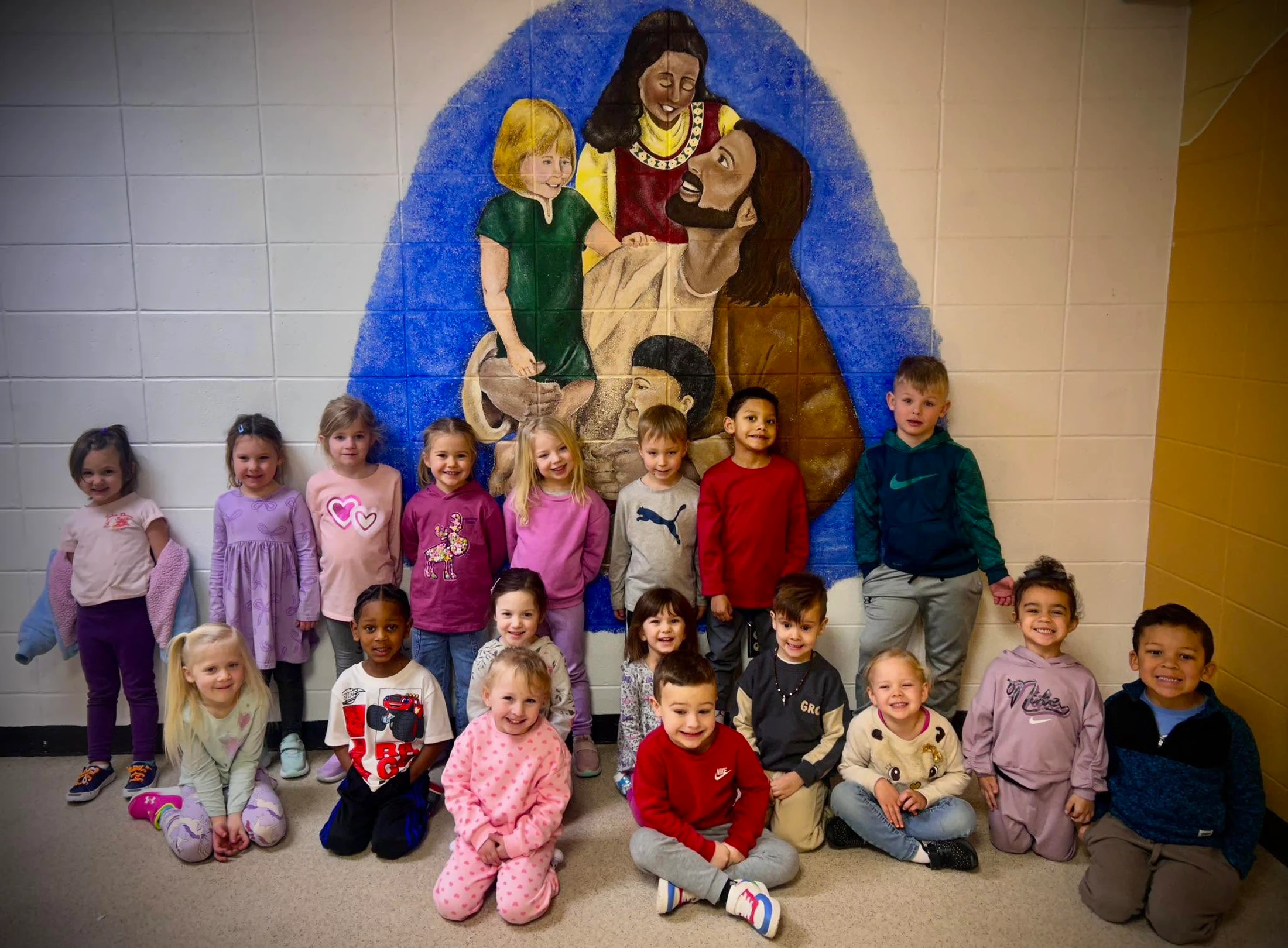
Your three- or four-year-old isn’t old enough for kindergarten. But they’re curious, energetic, and learning something new every single day!
So if you’re like most parents, you’ve probably wondered: “Do they really need preschool? Can I just keep teaching them at home until kindergarten?”
It's a fair question, and it's one that many thoughtful, loving parents ask! The good news is that you don't have to guess. There’s a growing body of research that can help you make an informed decision. Let’s talk about whether or not preschool makes sense for your family!
What Preschool Is (And Isn't)
Let’s clear something up, first: Preschool is not glorified babysitting, and it's not just organized playtime. A high-quality preschool program is a structured, intentional learning environment specifically designed for the developmental stage of three- and four-year-olds.
After reviewing 21 preschool programs, the Learning Policy Institute has identified the key elements that make early childhood education effective. They include:
Small class sizes with low student-to-teacher ratios
Well-prepared teachers who provide engaging interactions
Research-based and developmentally appropriate curricula
Meaningful family engagement.
The difference between 3K and 4K matters, too. Three-year-old programs focus heavily on foundational social skills, language development, and early exploration. Four-year-old programs build on that foundation with more structured pre-literacy and pre-math concepts, preparing children directly for the transition to kindergarten.
Each stage has a purpose, and each builds on the one before it.
The Academic Case for Preschool
Children who attend high-quality preschool programs enter kindergarten better prepared – academically, socially, and emotionally. Let’s go over why that’s true!
The Learning Policy Institute found clear positive effects on children's early literacy and mathematics skills among preschool attendees. Students who participated in high-quality programs were also less likely to be held back in elementary school and less likely to be identified as having special needs compared to children who did not attend preschool.
But what’s even more compelling is the fact that the benefits don’t stop at kindergarten.
A landmark 2021 study by researchers at MIT, UC Berkeley, and the University of Chicago tracked more than 4,000 children who had attended preschool in Boston, following them for nearly 20 years. Their findings, published by the National Bureau of Economic Research, revealed two notable facts:
Preschool attendanceincreased on-time college enrollment by 8 percentage points, an 18% increase compared to children who did not attend preschool.
Students who attended preschool were also 6 percentage points more likely to graduate from high school.
These are life-trajectory differences that can be traced all the way back to experiences in a preschool classroom.
The Social-Emotional Case for Preschool
Academic readiness is only part of the picture. Some of the most important things your child learns in preschool have nothing to do with letters or numbers.
Preschool is often the first time a child must navigate a social environment outside of their family. They learn how to share, take turns, resolve conflict, follow group directions, and build friendships with peers their own age.
It’s important to know that kids are building these skills in a safe environment. In preschool, they receive the gentle guidance of a qualified teacher who knows how to create a secure space for children to practice being part of a community.
And the long-term impact of these social-emotional skills is significant! The NBER study found that children who attended preschool showed improved behavioral outcomes well into their high school years. The researchers noted that these non-cognitive outcomes – behavior, self-regulation, and social skills – may actually be the most important channel through which preschool produces long-term benefits.
In other words, learning how to be a good classmate at a young age has positive ripple effects that show up decades later.
The Faith Case for Preschool
For Christian families, there’s another dimension to this conversation that the research doesn’t capture, but matters more than anything else on this side of heaven.
As parents, you are the number-one influence in your child's faith life. You planted the seed of faith in your child when you brought them to be baptized. At St. Mark Ministries, our mission is to “Teach timeless truths to today’s people so that all may share tomorrow’s eternity.”
Carrying out this mission means we invest heavily in equipping and empowering parents to raise their children as Jesus followers. And one of the many ways we do that is through an accredited, Christ-centered elementary school program at St. Mark Lutheran School.
Cindi Holman, Director of WELS Early Childhood Ministries, puts it beautifully. She describes WELS early childhood programs not as jobs, but as ministries: "There's a servant attitude that looks at early childhood ministries as an opportunity to serve not just the child, but the whole family."
When your child attends a faith-based preschool, they are not just learning their ABCs. They are learning that they matter and are dearly loved by their Heavenly Father.
Home Education vs. Preschool
Many families in our congregation and wider community choose home-based learning, for preschool and sometimes beyond, and we know this is a meaningful decision made with love. We support our many homeschool families at St. Mark through our youth ministries that welcome kids from all educational backgrounds.
As you’re considering preschool for your child, it’s worth understanding a few differences they'll encounter if you choose to enroll them in a classroom program vs. teaching them at home.
Peer interactions are more difficult to facilitate from home. Learning to thrive with a group of children their own age is an important developmental experience.
Qualified early childhood educators are deeply trained in shaping young minds. Early childhood education is a specialized discipline, and preschool teachers are trained to observe developmental milestones, scaffold learning at just the right level, and respond to the emotional and social needs of young children.
Structured transitions at an early age set children up for success. Preschool is often a child's first experience with a consistent daily routine outside the home. Things like parent drop-off, circle time, snack, group play, and clean-up are all learned in the classroom. These little routines help prepare your child for the rhythms of formal schooling in kindergarten and beyond.
Most importantly for Jesus-following families: A Christ-centered preschool extends your home's spiritual environment into your child's daily life, reinforcing what you are already doing. When you choose a preschool program like the one offered at St. Mark Lutheran School, you are not outsourcing your child's faith formation. You are finding a community of like-minded families and educators who will walk alongside you during these crucial child-rearing, faith-building years.
What to Look for in a Preschool Program
Not all preschools are created equal. If you are evaluating your options, the Learning Policy Institute's research points to six factors that distinguish high-quality programs from average ones:
Small class sizes and low student-to-teacher ratios: Your child should be known, not just managed.
Well-prepared, qualified teachers: Look for educators with early childhood training and a genuine love for young children.
Ongoing teacher support: Great programs invest in their teachers through professional development.
Research-based, developmentally appropriate curriculum: Learning should be structured and intentional.
Assessments that consider the whole child: Academic, social-emotional, and physical development should all be tracked and supported.
Meaningful family engagement: The best preschools see parents as partners, not bystanders.
When you tour a preschool, trust your instincts. Does the classroom feel warm and joyful? Do the teachers get down to the students' level? Are the kids engaged? Do you feel welcomed as a family? These observations matter as much as any checklist!
St. Mark Preschool Programs in De Pere and Green Bay
At St. Mark Lutheran School, our preschool programs are built on everything the research recommends, while rooted in something the research cannot measure. Here are some of the highlights your family can look forward to:
We offer separate 3K and 4K classrooms at our De Pere campus, allowing your child to learn alongside peers at their exact developmental stage. Our Green Bay campus offers a combined 3K/4K program that brings the stages together in a unique learning environment.
Both campuses feature small class sizes, caring Christian teachers, and play-based learning where faith is woven into every part of the day.
Our 4K program is fully accredited and eligible for the Wisconsin Parental Choice Program, which may make free tuition available to your family.
We offer flexible scheduling choices to meet families’ needs. You can choose from three or five days per week, with morning classes from 8 to 11 a.m. and extended care available until 3 p.m.
But beyond the logistics, what sets St. Mark apart is the heart behind everything we do!
As Cindi Holman of WELS Early Childhood Ministries notes, parents are looking for excellent, high-quality programs. We strive to be both. Our teachers pray with your children, teach them praise and worship songs, introduce them to God's Word, and care about their eternal home just as much as you do.
Many of our preschool families go on to stay with St. Mark through 8th grade. What begins in a 3K classroom often becomes a decade-long journey of faith and learning for the whole family!
What’s the Right Choice for Your Family?
If you’ve been on the fence about preschool, here is what we hope you take away from this:
Research shows that quality preschool prepares children academically, shapes them socially and emotionally, and produces benefits that last well into adulthood.
For families of faith, the case goes even deeper. Preschool is not just about kindergarten readiness. It is about laying a foundation – spiritually, academically, and relationally – that will shape who your child becomes.
No matter what you choose, we know that you’re prayerfully making the best possible decision for your unique child and family circumstance. We are here to support you in bringing up your child in the faith, whether or not you send them to our school.
Of course, you don’t have to figure all of this out alone. We would love to answer your questions, show you our classrooms, and help you find the right fit for your family.
Schedule a tour to see our programs for yourself. We would love to meet you!
Sources:
Learning Policy Institute. "Untangling the Evidence on Preschool Effectiveness: Insights for Policymakers." Link
Gray-Lobe, G., Pathak, P.A., & Walters, C.R. (2021). "The Long-Term Effects of Universal Preschool in Boston." NBER Working Paper 28756. Link
Holman, C. WELS Early Childhood Ministries Director. Interview conducted by Early Childhood Ministries. Link
School Gala Tickets NOW ON SALE!
Click here!